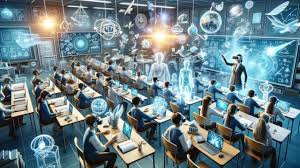
In recent years, Artificial Intelligence (AI) has moved from science fiction into nearly every aspect of modern life. One of the most transformative applications of AI is in the field of education, where it is reshaping how students learn, how teachers teach, and how educational institutions function. With the rise of tools like ChatGPT, personalized learning platforms, and intelligent tutoring systems, the education landscape is undergoing a digital revolution.
The Rise of AI in Classrooms
AI is not new to education, but its capabilities have advanced dramatically with the rise of machine learning, natural language processing (NLP), and big data. From automatic grading systems to AI-powered learning assistants, schools and universities are adopting smart technologies to streamline processes and enhance the learning experience.
According to a report by HolonIQ, the global market for AI in education is expected to reach $20 billion by 2027, showing a compound annual growth rate of over 40%. This rapid adoption is driven by the increasing demand for personalized and adaptive learning solutions.
Personalized Learning: Tailoring Education to the Individual
One of the most significant benefits of AI in education is personalized learning. Traditional education systems often adopt a one-size-fits-all approach, which can leave behind students who learn differently. AI-powered platforms, however, can adapt to individual learning styles, paces, and needs.
For instance, platforms like Khan Academy and Coursera use algorithms to recommend content based on a learner’s past performance. More advanced systems can analyze patterns in student behavior to identify strengths and weaknesses, offering targeted exercises or lessons accordingly.
This kind of tailored instruction helps students learn more effectively and fosters a deeper understanding of the material.
Intelligent Tutoring Systems
Intelligent tutoring systems (ITS) simulate one-on-one human tutoring. They use AI to assess a student’s responses and provide immediate feedback. Examples include Carnegie Learning, which specializes in math instruction, and Socratic by Google, which helps students solve problems through guided steps.
These systems not only answer questions but also track how a student solves problems, allowing them to give advice that targets the student’s thinking process.
Automating Administrative Tasks
AI is also streamlining the administrative burden on educators. Teachers spend a significant amount of time grading, planning lessons, and managing classroom activities. AI tools can automate:
- Grading of multiple-choice and short-answer tests
- Attendance tracking
- Scheduling and resource allocation
- Analyzing student performance data
This automation gives teachers more time to focus on teaching and engaging with students, rather than getting bogged down by paperwork.
AI Chatbots and Virtual Assistants
Many universities and educational platforms are now using AI chatbots to handle routine student inquiries. These bots are available 24/7 and can answer questions about coursework, deadlines, registration, and more.
For example, Georgia State University implemented an AI chatbot called “Pounce” that reduced summer melt (students who fail to enroll despite being admitted) by over 20%. The chatbot answered more than 200,000 questions from students and parents in just a few months.
Enhancing Accessibility and Inclusion
AI is also improving accessibility for students with disabilities. Speech-to-text tools, text-to-speech systems, and real-time translation apps make learning more inclusive.
For example:
- Seeing AI by Microsoft helps visually impaired students interpret their surroundings.
- Otter.ai and Whisper by OpenAI transcribe spoken words into text for hearing-impaired learners.
Language translation tools powered by AI help non-native speakers access educational material in their preferred language, fostering global inclusion.
Challenges and Ethical Considerations
Despite the many benefits, the integration of AI in education also comes with significant challenges:
1. Data Privacy
AI systems require vast amounts of data to function effectively. This raises concerns about how student data is collected, stored, and used. Schools must ensure strict data privacy policies are in place to protect sensitive information.
2. Bias and Fairness
If AI systems are trained on biased data, they can inadvertently reinforce inequalities. For instance, algorithms might favor certain learning styles or cultural backgrounds over others. Developers and educators must work together to ensure fairness and transparency.
3. Dependence on Technology
An overreliance on AI might weaken essential human interactions in education. While technology can supplement learning, it shouldn’t replace the role of teachers in mentoring, inspiring, and emotionally supporting students.
4. Digital Divide
Not all students have access to the internet or smart devices. The integration of AI could widen the gap between students from different socio-economic backgrounds unless equitable access is prioritized.
The Future of AI in Education
The future holds immense promise for AI in education. Here are a few trends to watch:
- AI-Generated Content: Tools like ChatGPT can help teachers create lesson plans, quizzes, and even feedback on essays.
- Gamification: AI can power educational games that make learning more engaging and effective.
- Predictive Analytics: Institutions can use AI to identify at-risk students and intervene early, improving retention and success rates.
- Lifelong Learning: AI can support adult learners by creating flexible, on-demand courses tailored to individual career goals.
Conclusion
AI is revolutionizing education, offering personalized, efficient, and accessible learning experiences. From intelligent tutoring systems to administrative automation, the benefits are vast and growing. However, as we move forward, it is essential to address the ethical and practical challenges of integrating AI into the classroom.
For AI to truly democratize education, it must be inclusive, fair, and designed with the human experience at its core. The goal is not to replace educators but to empower them—and their students—with tools that enhance learning outcomes and open doors to new possibilities.